

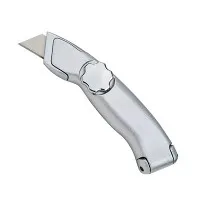

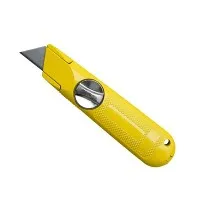

Knife Blades
Your Professional Knife Blades Supplier
Our goal is to become your reliable partner in the knife blades in China. Established in 1992, Wenzhou Xinrongxin Technology Co., Ltd. has specialized in the design and production of hand tools such as utility knives, scrapers, hand saws and other cutting tools for over 30 years. We are committed to applying advanced manufacturing technologies and strict quality control standards to every product. Our products are quality-assured, making us a dependable choice for long-term cooperation.




Production Equipment:
Our company possesses advanced production equipment, including over 300 sets of molds, cold chamber die-casting machines, hot chamber die-casting machines, injection molding machines, industrial robot arms, integrated metal polishing and dust removal systems, shot peening machines, tapping machines, pipe cutting machines, drying tunnel assembly lines, high-frequency plastic welding machines, single-phase resistance-start asynchronous motors, and automatic high-speed blister packaging sealing machines.
Our Certifications:
We have obtained authoritative certifications such as BSCI and ISO 9001.
Customized Solutions:
We emphasize technological innovation and product development, and can develop customized products according to customer needs. We can efficiently handle OEM and ODM customization requirements and adapt to different customer cooperation scenarios.
Advantages of Knife Blades
Blade shape:
Straight edges offer clean, uniform cuts for precision, while curved blades are optimal for rocking motions in cooking.
Tanto:
Offers high strength at the point, designed for piercing tough materials.
Convenience & safety:
Fixed blades offer superior strength and stability, whereas folding and replaceable-blade knives provide superior portability and razor-like sharpness for field dressing.
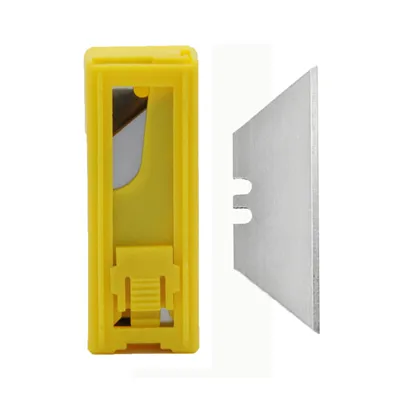
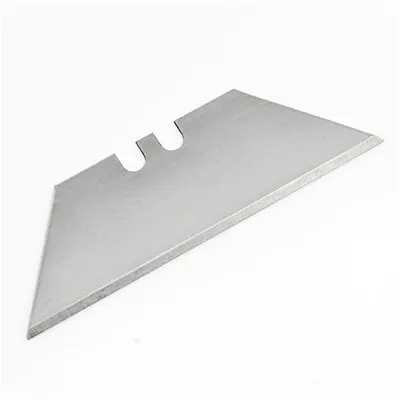
Specification of Knife Blades
|
Blade Material |
60# Carbon steel/SK5 |
|
Blade Size |
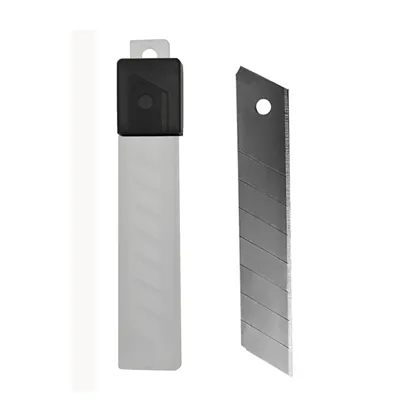
61*19*0.5mm |
|
Sample service |
Available |
Features of Knife Blades
Knife blades are defined by their shape, steel type, grind, and edge, determining their strength and purpose. Key features include the spine (top edge), edge (cutting surface), and point.
Common blade profiles include versatile drop points, precise clip points, and strong tanto styles, generally categorized by steel hardness, corrosion resistance, and sharpness.

Types of Knife Blades
Straight edge blades: Straight blades have a distinct blade shape. They are simple, straight cutting edge, ideal for everyday tasks like slicing fruits, vegetables, and other common items. Their simplicity makes them easy to use and maintain.
Serrated blades: Serrated blades feature a jagged edge, resembling small teeth. These blade shapes are excellent for cutting through tough materials, such as bread or rope, due to their saw-like action.
Tanto blades: Tanto blades have a strong, angular point, making them suitable for piercing and tactical applications. They originated from japanese swords and have become popular in modern tactical knives.
Clip point blades: Clip point blades have a concave curve and a fine tip, making them suitable for precision cuts. This blade shape is commonly found in a pocket knife and is versatile for various cutting tasks.
Drop point blades: Drop point blades have a curved edge for blade shapes and a lowered point, providing a robust and versatile design.
Wharncliffe blades: Wharncliffe blades have straight blades and a flat spines, offering excellent control for detailed cutting. They are often used in crafting and precision work.

Production Process of Knife Blades
Material selection: High-carbon or stainless steel sheets/coils are selected for properties like hardness and rust resistance.
Shaping the blade: Blanks are cut from steel sheets using water jets, lasers, or stamping.
Forging:
Steel is heated and hammered into shape to refine the metal's grain structure for increased strength.
Heat treatment:
Blades undergo heating, cooling (quenching), and tempering to achieve the proper hardness, flexibility, and wear resistance. Specialized processes, such as ice-hardening, improve corrosion resistance.
Grinding and beveling:
The blade is ground, often creating a hollow or flat bevel to establish the edge, tapering from the spine to the edge.
Finishing and sharpening:
Surfaces are polished (often to a mirror finish), and the edge is sharpened to its final, functional sharpness.
Other Service of Knife Blades
|
Package |
Box |
|
Shipping |
Sea/Express |
|
Payment |
We accept T/T and L/C. For samples or small trial orders |
FAQ