Hey everyone,
If you’ve ever tackled a drywall installation, repair, or even a small DIY project, you know how crucial the right tools are for getting clean, smooth cuts without all the hassle. One question I get all the time from fellow builders, handymen, and DIYers is: “Can I use a snap off blade utility knife for cutting drywall?” As a snap off blade utility knife supplier who’s been in this game for years, I’ve seen everything from botched cuts with cheap tools to perfect finishes with the right one. Let’s break this down straight—no fancy jargon, just real talk from someone who knows these knives inside out.
First off, let’s get the basics out of the way. Drywall (also called gypsum board or plasterboard) is that heavy, paper-faced panel we use for interior walls and ceilings. It’s not hard, but it’s tough enough that using the wrong knife can lead to ragged edges, paper tearing, or even injury. Snap off blade knives—those with multiple small segments that you snap off to expose a fresh, sharp edge—are super common because they’re affordable, easy to maintain, and you always have a sharp blade on hand. But are they actually good for drywall?
Short answer: Yes, but not all snap off blades are created equal. Let’s start with why they work in the first place. When you cut drywall, you don’t need to dig through the thick gypsum core—you just need to score the paper face and the thin top layer of gypsum, then snap the panel along the score line, and cut the back paper. A sharp snap off blade is perfect for scoring that initial line because it’s thin enough to make a clean score without pushing too hard, which is key for preventing the gypsum from cracking unevenly.
Wait, but here’s where a lot of people go wrong. If you grab a tiny 9mm snap off blade utility knife, that’s probably not going to cut it for larger drywall projects. Why? The smaller blade is thinner and less rigid, so it can flex when you’re scoring longer lines, leading to wavy cuts. On the flip side, a heavy-duty 18mm blade has more material behind it, so it’s stiffer—exactly what you need for straight, consistent scores on full sheets of drywall. That’s why so many of our regular contractors swear by our 18mm Industrial Snap Off Cutting Knife (you can check it out here: /utility-knife/snap-off-blade-utility-knife/18mm-industrial-snap-off-cutt-ing-knife.html) for drywall work. It’s built to handle repeated heavy use, and the 18mm blade is thick enough to stay stable while you score.
Let’s talk about the steps for cutting drywall with a snap off knife, too—because even a good tool won’t help if you’re using it wrong. First, measure and mark your cut line with a straight edge (a level or a T-square works great—don’t try to freehand this, unless you’re a total pro). Then, clamp the drywall to sawhorses or a workbench so it doesn’t move. Now, grab your snap off blade knife, set the blade to a length that’s just enough to score the top paper and gypsum—usually ¼ to ½ inch is perfect. Too long, and you’ll dig into the core; too short, and the score won’t be deep enough. Run the knife along the straight edge, applying even, moderate pressure—you want one smooth pass, not back-and-forth sawing (sawing will tear the paper and make a mess). Once you’ve scored the top, flip the drywall over and apply firm pressure along the score line to snap it clean. Then, you just need to cut the back paper—this is where a sharp snap off blade really shines. The thin blade will slice through the paper easily without dragging, leaving a crisp edge.
I’ve seen DIYers use a smaller 9mm Snap Off Cutting Utility Knife (link: /utility-knife/snap-off-blade-utility-knife/9mm-snap-off-cutting-utility-knife.html) for tiny drywall cuts, like when you’re trimming around a door frame, and that works fine. For small, detailed cuts, the smaller blade is actually more maneuverable. But for full sheets, big repairs, or any cut longer than a couple feet, you’ll want to step up to a larger blade. That’s why our 18mm Snap Off Cutting Utility Knife (here’s another one: /utility-knife/snap-off-blade-utility-knife/18mm-snap-off-cutti-ng-utility-knife.html) is a go-to for contractors. It has a thicker blade backing, so no flex when you’re scoring a 4-foot line across a drywall sheet.
Another big point: blade quality. Not all snap off blades are made the same. Cheap, low-grade blades from big-box stores dull fast, which means you’re sawing instead of scoring, leading to bad cuts. Our snap off blades are made from high-carbon steel, which holds an edge longer and stays sharp through multiple drywall cuts. We also have an 18mm Snap Off Heavy Duty Knife (link: /utility-knife/snap-off-blade-utility-knife/18mm-snap-off-heavy-duty-knife.html) that’s built for the toughest jobs—think commercial drywall projects, where you might cut hundreds of sheets a day. That knife has a metal handle instead of plastic, so it’s more durable, and the blade is thicker and stiffer for maximum stability.
Wait, let’s address a common myth: some people think utility knives with fixed blades are better for drywall. But snap off blades have a huge advantage—when one segment gets dull, you just snap it off with a pair of pliers (or our built-in blade breaker, which all our knives have) and you’ve got a fresh, sharp edge. No need to change the whole blade, which saves time and money. For someone working on a drywall job, that convenience is a game-changer. You don’t have to stop every 10 minutes to swap blades; you just snap off a segment and keep going.
Now, let’s talk about safety, because that’s something I never skip. When cutting drywall, you’re dealing with dust (which is not great for your lungs—always wear a mask!) and a sharp blade. With a snap off knife, make sure the blade is locked in securely before you start cutting. Most of our knives have a quick-release lock that’s easy to use but keeps the blade from slipping. Don’t extend the blade longer than you need—more blade exposed means more risk of it bending or breaking, which can cause injuries. And always cut away from your body, not toward it. That’s basic, but it’s worth repeating because I’ve seen too many accidents from people rushing.
What about when you’re doing notches for electrical boxes or outlets? That’s where maneuverability matters. Our smaller 9mm knife works great for those tight, curved cuts, but if you’re working on a bigger project, you can use the 18mm knife with a shorter blade for precision. It’s all about adjusting the blade length to the job. And for those odd cuts, like around pipes, a snap off blade is still better than a regular knife because you can get a very thin, sharp edge that can follow tight curves without tearing the paper.
I should also mention that drywall has a paper backing, so if your blade is dull, it will tear that paper instead of cutting it, leading to rough edges that are hard to finish with joint compound. A sharp snap off blade—especially a good one from a reputable supplier—eliminates that problem. When you score the top paper with a sharp knife, you get a clean groove, and when you snap the panel, the edge is smooth enough that you barely need to sand it before taping. That saves you time on the finishing phase, which is a big deal for any project.
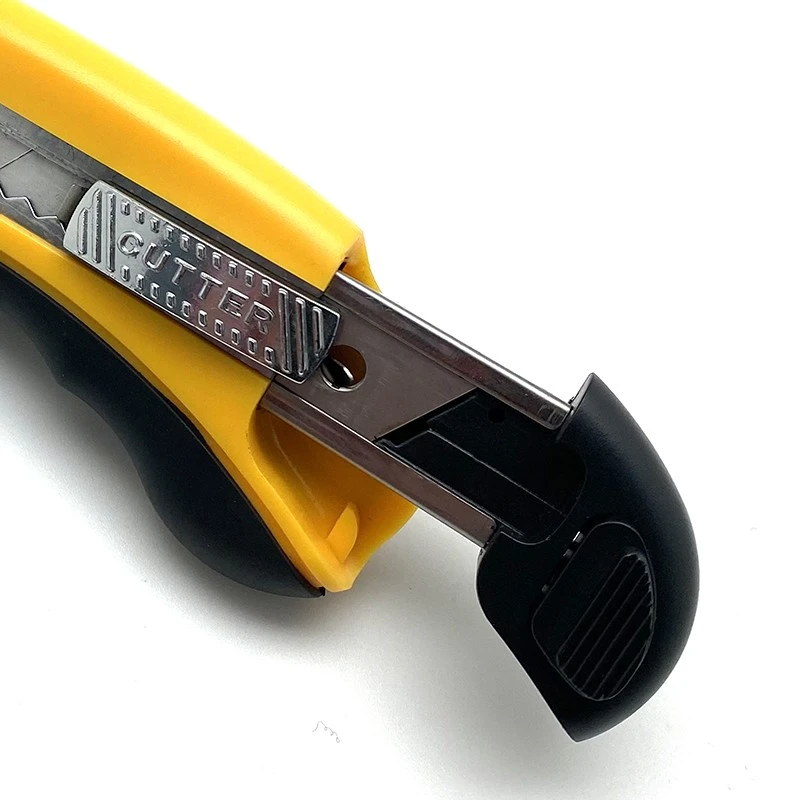

Let’s do a quick test case from a few months back. A regular customer of ours was a small contractor who was using a cheap 9mm knife for all his drywall cuts. He told me he was spending twice as much time fixing ragged edges, and he even had a few sheets crack because the blade flexed too much. He switched to our 18mm Snap Off Cutting Utility Knife (this link: /utility-knife/snap-off-blade-utility-knife/18mm-snap-off-cutting-utility-kni-fe.html) and said his drywall cuts went from taking 20 minutes per sheet to 10 minutes, and the finish was way cleaner. That’s the kind of feedback that makes me love what I do—knowing our tools are making people’s jobs easier.
Another thing: storage and maintenance. Snap off blade knives are easy to store in a tool belt, and since the blades are replaceable, you can keep a few extra segments on hand. Just make sure to keep the knife dry—moisture can cause the steel to rust, which will make the blade dull faster. All our knives come with a protective cover for the blade, so you can toss it in your tool bag without worrying about it nicking other tools or getting damaged.
Now, if you’re wondering which snap off knife is right for your drywall project, here’s a quick cheat sheet:
- DIY small projects (trimming, small repairs): Go with the 9mm Snap Off Cutting Utility Knife. It’s cheap, maneuverable, and sharp enough for small cuts.
- Medium projects (room additions, small walls): The 18mm Snap Off Cutting Utility Knife is perfect—stiff blade, stable, and just right for most drywall work.
- Heavy-duty commercial jobs: The 18mm Industrial Snap Off Cutting Knife or 18mm Snap Off Heavy Duty Knife will stand up to repeated use and give you consistent cuts all day long.
I know there are a lot of options out there, but as a supplier who’s worked with thousands of people on drywall projects, I can tell you that a good snap off blade knife is a worthwhile investment. It’s not just about cutting— it’s about the quality of your finish and how much time you save.
If you’re ready to upgrade your tools for your next drywall job, or you’re a contractor looking to stock up on reliable knives, don’t hesitate to reach out to our team. We can help you pick the right knife for your specific needs, whether that’s for a tiny DIY project or a big commercial build. We’ve got all the options mentioned here, and we’re always happy to answer any questions you have about using our snap off blade utility knives for drywall or any other job.
Just remember: a snap off blade utility knife isn’t just “okay” for cutting drywall—it’s one of the best tools you can use, as long as you pick the right size and quality. It’s affordable, convenient, and gives you the sharp edge you need for clean, professional cuts. Don’t waste time with cheap, flimsy knives that cause headaches—grab a quality snap off blade knife, and your drywall projects will go way smoother.
Thanks for reading, and feel free to get in touch if you need more info!
References:
- Drywall Installation Guide - National Association of Home Builders
- Tool Safety Handbook - Occupational Safety and Health Administration (OSHA)
- Utility Blade Performance - Industrial Supply Association