

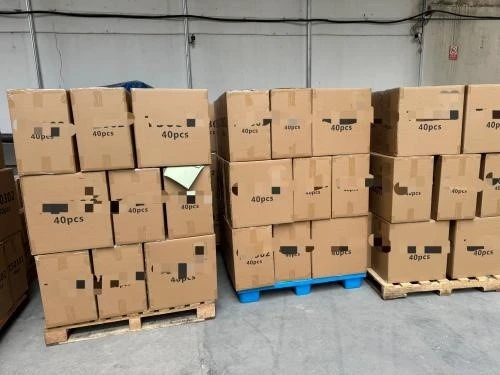
Third-quarter shipping records show more than 60 shipments of Utility Knife orders dispatched between July and September, reaching customers in the United Kingdom, Sweden, Canada, the United States, Brazil, Australia, and New Zealand, with order sizes ranging from small trial lots to full container loads - and every shipment documented to leave on or before its agreed date.
The Quarter in Numbers
The figures behind this quarter of Utility Knife exports are simple and worth reading plainly. More than 60 shipments left the factory between July and September, spread across seven destination markets on four continents: the United Kingdom and Sweden in Europe, Canada and the United States in North America, Brazil in South America, and Australia and New Zealand in Oceania. The order sizes varied widely, as they always do in this trade - a first-time buyer testing a carton of samples sits on the same production schedule as a distributor replenishing a pallet program. What did not vary was the commitment attached to each order: goods ready to ship on or before the date agreed at purchase confirmation. A small order that arrives late teaches a customer not to reorder; a large order that arrives late costs them a shelf slot. Treating the two the same way is not generosity, it is how a supplier stays on a reorder list.
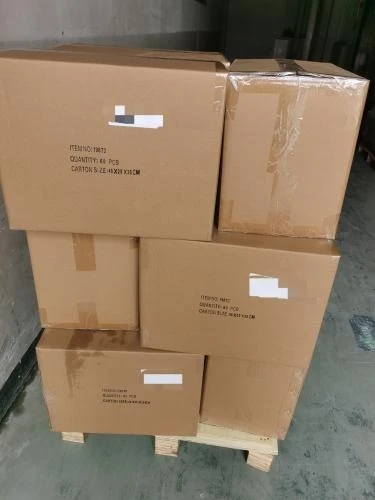
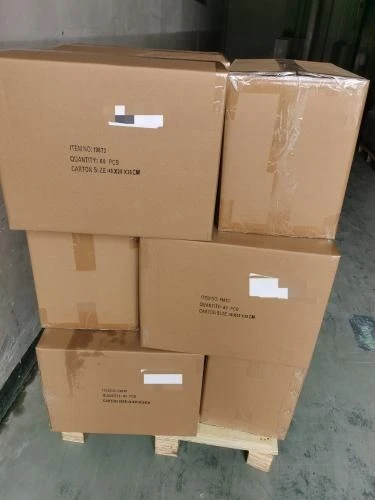
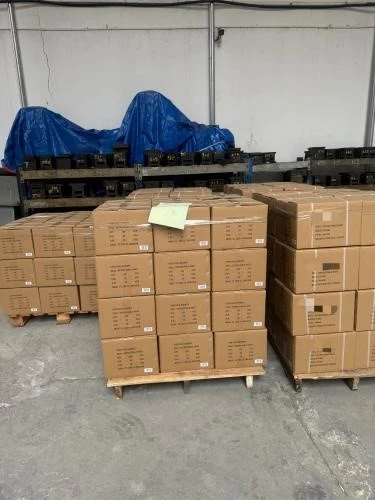
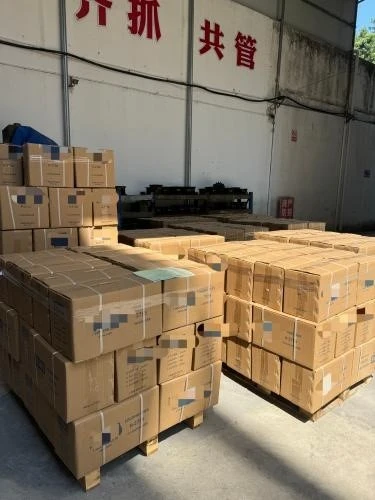
What Shipped: The Product Behind the Numbers
The product moving through these shipments is the Utility Knife - the retractable-blade cutting tool that warehouses, mailrooms, retail stockrooms, and moving households reach for first when a carton needs opening. It is an unglamorous category with a permanent demand curve: every parcel economy generates its own consumption of cutting tools, and the buyer choosing a supplier is weighing blade quality, body construction, and consistency from batch to batch more than any single feature. That consistency question is exactly where the quarterly record matters more than a product photograph. A Utility Knife shipment that arrives as promised, with the same blade steel and the same body fit as the previous shipment, is what turns a trial order into a program - and most of the sixty-plus shipments this quarter were precisely that: repeat volume from customers whose first order was small.
How On-Time Delivery Actually Happens
An on-time shipment is not a promise kept at the loading dock; it is a sequence kept upstream. Material has to be reserved when the order is confirmed rather than when production calls for it, blade assembly and packaging have to be scheduled against the confirmed date rather than fitted around it, and the booking with the carrier has to be placed early enough that vessel space is a fact, not a hope. Trade terms are fixed under the internationally standardized Incoterms 2020 rules published by the International Chamber of Commerce, which define exactly where the seller's responsibility ends - a boundary that both sides should read the same way before the order is signed, not after the goods are at the port. Documentation follows the same discipline: commercial invoice, packing list, and the shipping documents each destination requires are prepared against the shipment, not reconstructed after it.

Compliance and Customs: The Quiet Part of Every Shipment
Every one of those sixty-odd shipments crossed at least one customs border, and each crossing was prepared under the same frameworks regardless of destination size. Goods are classified under the Harmonized System maintained by the World Customs Organization, which is what allows a hand tool to clear customs in Sweden under the same heading logic it clears in Brazil. Product-safety obligations differ by market - the EU's General Product Safety Regulation governs goods placed on the European market, while the United States operates under the Consumer Product Safety Act enforced by the CPSC - and a shipment prepared correctly carries the documentation those regimes expect before it sails, not after it is held. Container security closes the loop: shipments moving under seal use seals conforming to ISO 17712, the international standard for mechanical freight-container seals.
What Varied Order Sizes Say About a Factory
The spread between a sample lot and a full pallet program is a stress test of production planning, and it is also where a Utility Knife line proves it can hold tolerance on more than the product: and the quarter's record shows both moving through the same line without the small orders being pushed aside. That matters to two kinds of buyers. The first-time buyer wants to know that a modest trial order gets production attention rather than the residual capacity left after the big programs run; the program buyer wants to know that small orders are not destabilizing the schedule their replenishments depend on. Running both from one planning discipline - confirmed-date scheduling rather than size-based triage - is what allows a supplier to serve distributors and single-store operators out of the same factory without either feeling like the afterthought.
FAQ
Which countries received shipments this quarter?
The United Kingdom, Sweden, Canada, the United States, Brazil, Australia, and New Zealand - seven destination markets across Europe, North America, South America, and Oceania.
Do small orders receive the same treatment as large ones?
Yes. Orders are scheduled against their confirmed ship dates regardless of size, because a late sample order costs a new customer relationship and a late replenishment costs an established one.
What documentation accompanies a typical shipment?
Commercial invoice, packing list, and the transport and customs documents required by the destination market, prepared under Incoterms 2020 terms agreed at order confirmation.


The bottom line
Sixty-plus shipments in three months, seven countries on four continents, and a delivery record kept by scheduling every order - sample lot or container load - against the date it promised. That is the whole story of the quarter for the Utility Knife line: the product is simple, and so is the standard applied to it. Ships on time, every time, in every size.
Sources
International Chamber of Commerce - Incoterms 2020 - The standardized trade terms defining seller and buyer responsibilities in each shipment.
World Customs Organization - Harmonized System - The international goods classification framework underlying every customs entry.
Regulation (EU) 2023/988 - General Product Safety Regulation governing products placed on the EU market.
U.S. Consumer Product Safety Act - The statutory framework enforced by the CPSC for products sold in the United States.
ISO 17712 - Mechanical freight-container seals: the security standard applied to sealed shipments.
ISO 9001 - Quality management systems: the production-side framework behind batch consistency.


