

There's a quiet shift happening in professional workwear. Tradespeople, flooring installers, plumbers, and landscapers are moving away from strapping bulky external knee pads over their work trousers and toward something more integrated-foam inserts that sit directly inside dedicated pockets built into the trousers themselves. The difference in daily comfort and consistency of protection is significant, yet the underlying technology is often poorly understood. This article examines how work knee pads foam pants insert systems function, why they often deliver better outcomes than strap-on alternatives, and what the research says about kneeling injury prevention.
The Problem with Kneeling at Work
Before exploring the solution, it's worth understanding the scope of the problem. Occupational exposure to frequent kneeling or squatting places substantial mechanical stress on the knee joint. Research published in peer-reviewed medical journals using MRI imaging has documented how repeated occupational kneeling is linked to cartilage morphology changes at the tibiofemoral joint-structural changes that precede osteoarthritis. Similarly, systematic reviews published in orthopedic literature have identified knee-straining work activities such as kneeling and squatting as significant risk factors for meniscal lesions, which are themselves associated with accelerated onset of knee osteoarthritis.
NIOSH-the National Institute for Occupational Safety and Health-has maintained ongoing research programs examining work-related musculoskeletal disorders, recognizing that physical work exposures including kneeling represent a meaningful source of occupational injury. The economic and human cost of these injuries justifies serious attention to protective solutions.
The challenge is that protection only works when it's actually in place. Strap-on knee pads get removed, shift out of position, or are left behind when workers move quickly between tasks. This is precisely where the work knee pads foam pants insert design offers a structural advantage.
What Is a Foam Pants Insert Knee Pad?
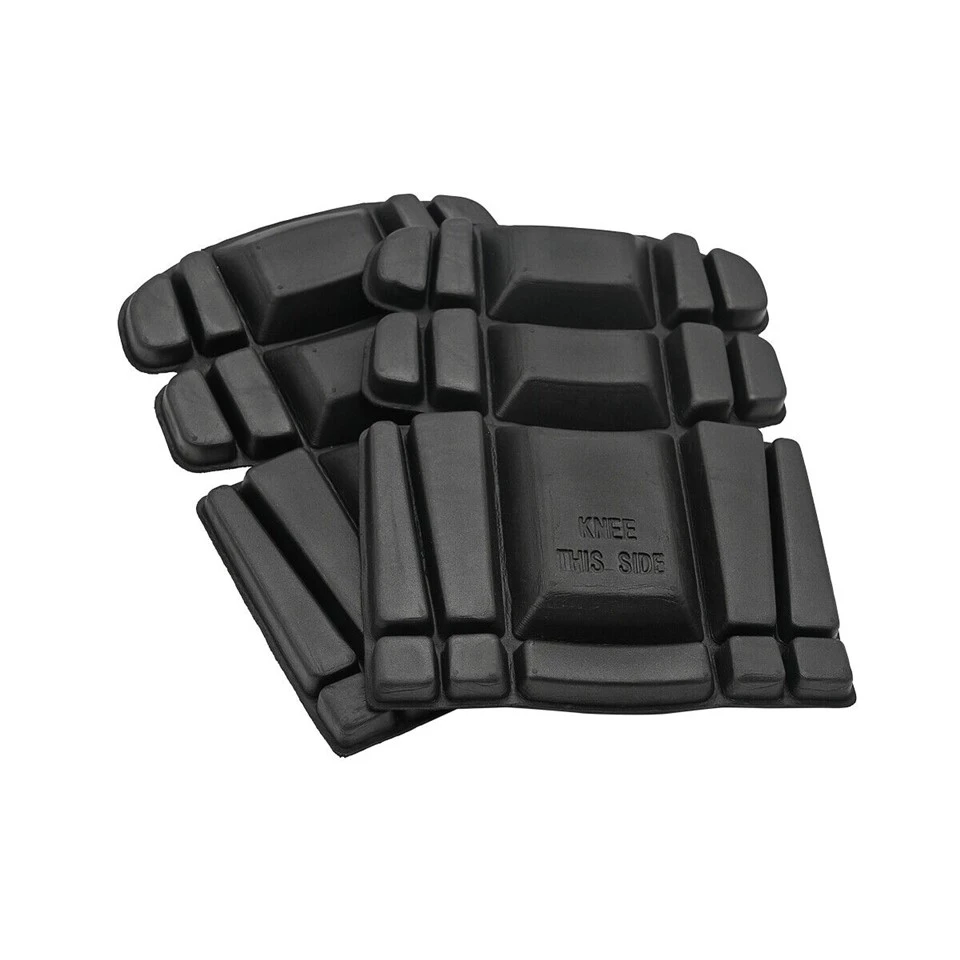
A foam pants insert knee pad is a shaped foam cushion designed to slide into a dedicated pocket built into the knee area of work trousers or cargo pants. Rather than wearing protection over the clothes with outside straps, the insert sits between the fabric layers of the pants. So it goes directly behind the knee area where the contact with floors happens.
So the insert itself is usually cut to a shape that fits the body. So it covers the kneecap and the area around the knee. And it has curves that fit the natural knee shape when you stand and when you kneel. So the foam material - usually polyurethane foam or similar man-made foams - gives the cushioning and energy absorption needed to protect the joint from impact and constant pressure.
So work knee pads foam pants insert systems are covered by the European safety standard EN 14404. So this standard sets the rules for knee protection gear for kneeling work. Under this standard, Type 2 knee protectors are defined as insertable knee pads that are made to go into work pants with special pockets. So the 2024 update of EN 14404 added new requirements for these insertable designs. So this shows that they are more and more important in professional work clothes.
How Foam Inserts Improve Knee Protection
The improvement that work knee pads foam pants insert designs deliver over strap-on alternatives comes from several interconnected factors.
Consistent Positioning
The most fundamental advantage is position consistency. Strap-on knee pads migrate-they shift upward, rotate sideways, or bunch up under the knee as workers move. When a pad is even slightly off-center, protection is compromised. Contact with hard surfaces may occur on unprotected skin or trouser fabric rather than on the cushioned area.
Foam inserts inside trouser pockets don't migrate in the same way. The pocket holds the insert in the designed position relative to the knee, and the trouser fabric moves with the body as a unit. The insert stays over the kneecap through squatting, kneeling, crawling, and standing transitions-the full range of movements that tradespeople perform throughout a workday.
Research on functional knee pad design published in occupational safety journals has identified correct positioning as a critical variable in protection effectiveness. A well-designed insert that stays in place delivers meaningfully better outcomes than a superior pad that shifts out of position.
Pressure Dispersion Across the Full Contact Area
Studies examining contact pressure during kneeling have demonstrated that how pressure is distributed across the knee significantly affects both comfort and injury risk. Research in medical and recovery journals - including studies that looked at pressure spread devices for people with knee problems - has shown that lowering the peak contact pressure makes kneeling much more comfortable and easier to do for a long time.
So foam materials used in work knee pads foam pants insert products work by a squish action. So the foam changes shape slowly under weight. So this spreads the force over a larger area instead of letting it all hit one spot. So this spread lowers the peak pressure on sensitive body parts. So these include the kneecap, the tendon below the kneecap, and the soft tissue around the knee.
The trouser-integrated design contributes to this distribution. Because the trouser fabric covers the insert and moves with the knee, the entire foam surface maintains contact with the leg throughout the kneeling position. Strap-on pads can create gaps at the pad edges when the knee flexes, reducing effective contact area. The integrated design avoids this problem.
Elimination of Strap Pressure
External strap-on knee pads require straps cinched around the leg to stay in position. These straps exert circumferential pressure on the leg, and workers who wear strap-on pads for extended periods frequently report discomfort, skin irritation, and circulation concerns from tight straps-particularly after hours of physical work when legs may swell slightly.
Work knee pads foam pants insert designs eliminate strap pressure entirely. There's nothing encircling the leg. The insert is contained by the trouser pocket, and the trouser waistband and natural fit provide the only contact with the body. Workers who find strap-on designs uncomfortable often find pants insert systems significantly more tolerable throughout a long shift.
Maintained Mobility
Tradework requires freedom of movement-workers kneel, crouch, climb, and carry loads constantly. Outside knee pads, especially the bigger ones, can limit movement and add an awkward feel that workers must think about when they move in small spaces, use tools, or climb ladders.
So foam inserts inside work pants add very little bulk. And they keep the pants' natural way of moving. So the inserts bend with the fabric when the knee bends. And the pants' own shape decides how easy it is to move, not the big bulk of an outside pad. So this all-in-one way lets workers move naturally without the physical annoyance that outside pads sometimes cause.
Foam Material Selection and Performance
The foam used in work knee pads foam pants insert products varies across products, and material choice significantly affects performance.
Polyurethane foam is the top choice for good insert designs. So this is because it has a good mix of cushioning, spring-back, and toughness. So science papers in materials journals have said that PU foam gives high damage resistance under squishing because of its cell structure. So this is a natural property that fits cushioning jobs where the foam gets squished over and over. So the foam squishes to take in impact. Then it returns to its original shape to keep the same protection for the next squishes.
So density is a very important factor. So low-density foams feel very soft at first. But they squish all the way down under constant weight. So then they give less and less protection as workers stay on their knees for a long time. So higher-density foams keep their protective squish characteristics through long kneeling. So they support the knee against both impact and constant pressure. So good work knee pads foam pants insert products use medium to high-density foam that is made just right for work conditions.
So some inserts use multi-layer designs. So these combine foams with different densities to get different performance traits. So a softer outer layer gives initial comfort. And a harder inner layer gives support for constant weight. So other inserts use single-material designs with a density that is chosen to balance both needs.
Compatibility and Fit Considerations
Foam inserts require compatible trousers with properly sized and positioned knee pockets. This system approach means that both components-the insert and the trouser-must work together to deliver effective protection.
Trouser pocket placement affects insert positioning relative to the knee. Pockets positioned correctly for an average-height worker may not center the insert properly on shorter or taller individuals. Quality workwear systems account for this by offering different trouser lengths with corresponding pocket placements, or by providing pockets with adjustment features that allow insert position to be moved up or down relative to the knee.
Insert dimensions must match the trouser pocket. Inserts that are too small may move around inside pockets that are too big. So then they bring back the positioning problems they were made to fix. So inserts that are too big may fold or bunch up inside the pocket. Then this creates uneven cushioning. So inserts and pants that fit each other right make sure the insert lies flat and stays in the right spot the whole time you use it.
So the insert's shape should fit the natural shape of the knee. So it should have curves that put the cushioning material over the parts that are most at risk from impact and pressure. So these are the kneecap and the soft tissue next to it. So it should not put hard foam edges over these areas.
EN 14404 Compliance and Type Classifications
The EN 14404 standard puts knee protectors into types by their design and how they work with clothes. Type 1 is for strap-on pads that go on by themselves. Type 2 is for insertable knee pads made for workwear with special pockets. The standard got an update in 2024, and it added EN 14404-4 to cover insertable designs meant for use with different kinds of workwear.
Certified products must meet set rules for absorbing impact, working well for the body, and lasting a long time. Certification gives clear proof that the product has the level of protection it says it has. This is an important thing to think about when picking gear to stop injuries at work.
Workers and safety managers looking at work knee pads, foam pants, and insert options need to check that products have the right EN 14404 certification for their use. Employers in places with work safety rules may also need to give certified personal protective gear if knee protection is seen as necessary.
Practical Maintenance and Service Life
Foam inserts require simple care to maintain their protective properties. The removable design of working knee pads, foam pants and inserts allows users to remove inserts before cleaning the pants, preventing the washing cycle from breaking down foam materials or changing their shape. Inserts can be cleaned, dried and put back in place.
Periodic inspections help determine when inserts need to be replaced. Foam that has been permanently compressed-which looks thinner and won't return to its original thickness after use-is less protective and should be replaced. Broken or damaged inserts also need to be replaced, no matter how cushioned they appear to be.
The replaceable nature of insert designs provides an economic advantage over integrated padding that cannot be separately replaced. Workers can maintain protective performance by replacing inserts as needed without replacing entire trousers, extending the useful life of the overall system.
Conclusion
Work knee pads foam pants insert technology addresses a practical failure mode of traditional external knee pads: protection that migrates out of position, burdens workers with strap pressure, or gets abandoned because it's inconvenient. By integrating foam cushioning directly into trouser pockets, this design approach delivers consistent positioning, effective pressure distribution, freedom from straps, and maintained mobility throughout demanding work days.
The occupational health case for adequate knee protection is well-established in scientific literature-repeated kneeling without protection is associated with meaningful risk of joint damage. Work knee pads foam pants insert systems that meet EN 14404 standards and use appropriate foam materials provide the protection workers need in a format that supports compliance and comfort through long shifts across demanding trades.
References
PubMed Central (PMC) - Pressure Dispersion Pad Use and Contact Pressure Reduction During Kneeling: Clinical Study on Knee Protection Biomechanics
Springer - Contemporary Review on Knee Injuries and Protective Pads: Trends in Knee Protective Equipment Design and Function
BMC Musculoskeletal Disorders - Occupational Risk Factors for Meniscal Lesions: Systematic Review of Kneeling and Squatting Exposures in the Workplace
NIOSH (National Institute for Occupational Safety and Health) - Research Efforts to Prevent Work-Related Musculoskeletal Disorders through Ergonomics
Taylor & Francis - Functional Design and Comfort of Knee Pads for Occupational Use: Ergonomic Study Based on Leg Movement Patterns
SATRA Technology - Industrial Knee Pads: EN 14404:2024 Standard Update and Key Changes for Insertable Knee Protection Designs
ScienceDirect - Occupational Exposure to Ergonomic Risk Factors and Effects on Musculoskeletal Disorders: Systematic Review and Meta-Analysis


